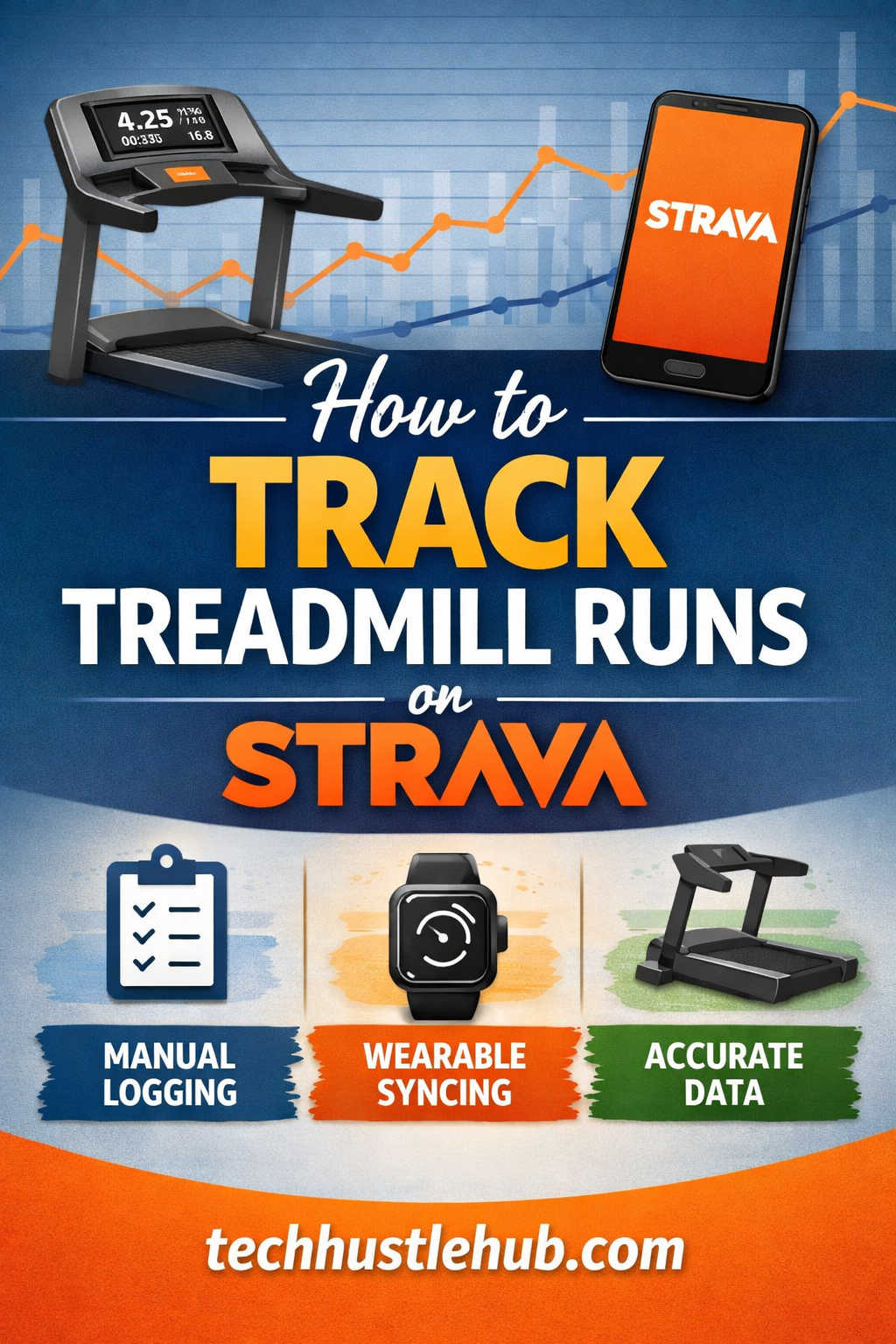
Indoor running is no longer just a backup plan for bad weather. For many runners, treadmill sessions are part of structured training, recovery routines, or daily fitness goals. At the same time, logging workouts on Strava has become essential for tracking progress, building habits, and staying motivated.
However, many people discover that recording treadmill runs isn’t as straightforward as outdoor activities. Because there’s no GPS signal indoors, Strava can’t automatically map distance or pace. That often leads to confusion, inaccurate logs, or skipped entries entirely.
This guide walks you through everything you need to know — from simple manual tracking to advanced device integrations — so you can accurately record treadmill workouts and get meaningful insights from your training data.
Skipping indoor sessions in your training log might seem harmless, but it creates gaps that affect your overall progress monitoring.
Maintain Accurate Training Data
When treadmill miles are missing:
Weekly distance totals are incomplete
Training load becomes misleading
Progress trends are harder to analyze
Logging every session ensures your performance picture stays accurate.
Monitor Improvement Over Time
Strava allows you to compare:
Pace consistency
Heart rate trends
Workout duration
Effort levels
Even indoor data contributes to understanding endurance development and recovery patterns.
Stay Motivated and Consistent
Recording workouts:
Reinforces discipline
Supports goal tracking
Keeps challenge participation active
Maintains streaks
Psychologically, tracking often encourages consistency.
Keep Your Fitness Story Complete
Your Strava feed represents your training journey. Including treadmill sessions ensures it reflects reality rather than only outdoor highlights.
Why Tracking Treadmill Runs Is Different
Outdoor runs rely on satellite positioning to determine distance and pace. Treadmill workouts depend on machine sensors or motion estimation.
This introduces several limitations:
No GPS mapping
Distance varies by treadmill calibration
Wrist motion may distort measurements
Environmental conditions differ from outdoor running
Because of this, tracking methods rely on alternative data sources rather than location signals.
The Best Ways to Track Treadmill Runs on Strava
Different runners have different needs. Some prioritize simplicity, others demand detailed metrics. The following methods cover the full range of options.
Manual Activity Entry (Simple and Reliable)
The most straightforward solution is entering the workout details yourself after finishing.
How to Do It
Complete your treadmill session.
Note distance, time, and pace from the treadmill display.
Open Strava.
Choose to add a manual activity.
Enter details and save.
When This Method Works Best
Beginners just starting on Strava
Casual runners
Occasional indoor workouts
Pros
No equipment required
Fast and easy
Fully accurate if treadmill data is trusted
Cons
No advanced analytics
Missing cadence or heart rate metrics
No pace breakdown charts
Despite limitations, this remains a dependable baseline approach.
Recording With the Strava App (Indoor Timing Method)
Another option is using Strava to track workout duration while entering distance afterward.
How It Works
You record the session as a run without relying on GPS. The app tracks elapsed time, then you edit distance manually.
Steps
Open recording screen
Select running mode
Disable location tracking if needed
Start and finish activity
Edit distance before saving
Advantages
Accurate timing
Integrated workflow
No extra hardware
Drawbacks
Distance still manual
Limited performance metrics
This approach suits users who want their activity timeline preserved automatically.
Using a Fitness Watch With Treadmill Mode
Wearable fitness watches significantly improve indoor tracking through motion-based estimation.
What Watches Measure
Distance based on stride patterns
Pace estimation
Cadence
Heart rate
After syncing, workouts upload automatically to Strava.
Tips for Better Accuracy
Calibrate regularly
Match recorded distance to treadmill display
Update calibration after shoe changes
Benefits
Rich analytics
Minimal manual work
Automatic uploads
Limitations
Device cost
Requires periodic adjustment
For frequent treadmill runners, this method offers a strong balance between ease and data depth.
Foot Pod Sensors for Precision Tracking
Foot pods attach to shoes and directly measure movement. Many experienced runners consider them among the most accurate indoor tracking tools.
Key Data Provided
Step frequency
Stride length
Distance accuracy
Pace stability
Why Consider This Option
Superior measurement consistency
Ideal for interval training
Reliable indoor performance tracking
Tradeoffs
Extra cost
Setup required
If you’re focused on precision metrics, foot pods are worth evaluating.
Smart Treadmill Data Integration
Modern treadmills sometimes connect to digital platforms capable of syncing workout data automatically.
Potential Data Sharing
Speed
Incline
Distance
Calories
Workflow Overview
Treadmill logs session
Data syncs to companion app
App shares activity to Strava
Advantages
Fully automated tracking
Machine-based accuracy
Minimal user effort
Challenges
Compatibility limitations
Setup complexity
Not available on most basic machines
This method works best for users with connected home equipment or advanced gym setups.
Improving Indoor Tracking Accuracy
Regardless of method used, certain habits improve data reliability.
Keep Devices Calibrated
Match estimated distance against treadmill readings periodically.
Avoid Holding Handrails
Restricted arm movement distorts wrist-based measurement.
Maintain Natural Running Form
Consistent movement patterns improve algorithm accuracy.
Logging these improvements reinforces progress awareness.
FAQs Readers Often Ask
Can Strava track treadmill distance automatically?
Not directly through GPS. Distance must come from manual entry, wearable estimation, or connected equipment.
Is treadmill running counted toward challenges?
Most indoor miles count toward distance goals when logged properly.
Which method is most accurate?
Foot pod sensors and calibrated equipment integrations typically provide the most reliable data.
Should I trust treadmill pace?
Treat it as a guideline rather than an exact comparison to outdoor running performance.
Final Takeaway
Tracking treadmill workouts on Strava is essential for maintaining a complete and meaningful training record. While indoor running lacks GPS mapping, several practical solutions exist — ranging from simple manual entry to advanced sensor-based tracking.
Choosing the right method depends on your priorities:
Convenience and simplicity — manual logging
Balanced automation — wearable device tracking
High precision — foot sensor measurement
Maximum automation — connected treadmill syncing
Consistency matters more than technology. Recording every workout ensures accurate progress tracking, stronger motivation, and better long-term insights into performance.
Indoor miles contribute just as much to fitness development as outdoor runs. When tracked thoughtfully, treadmill sessions become valuable components of a well-rounded training strategy.