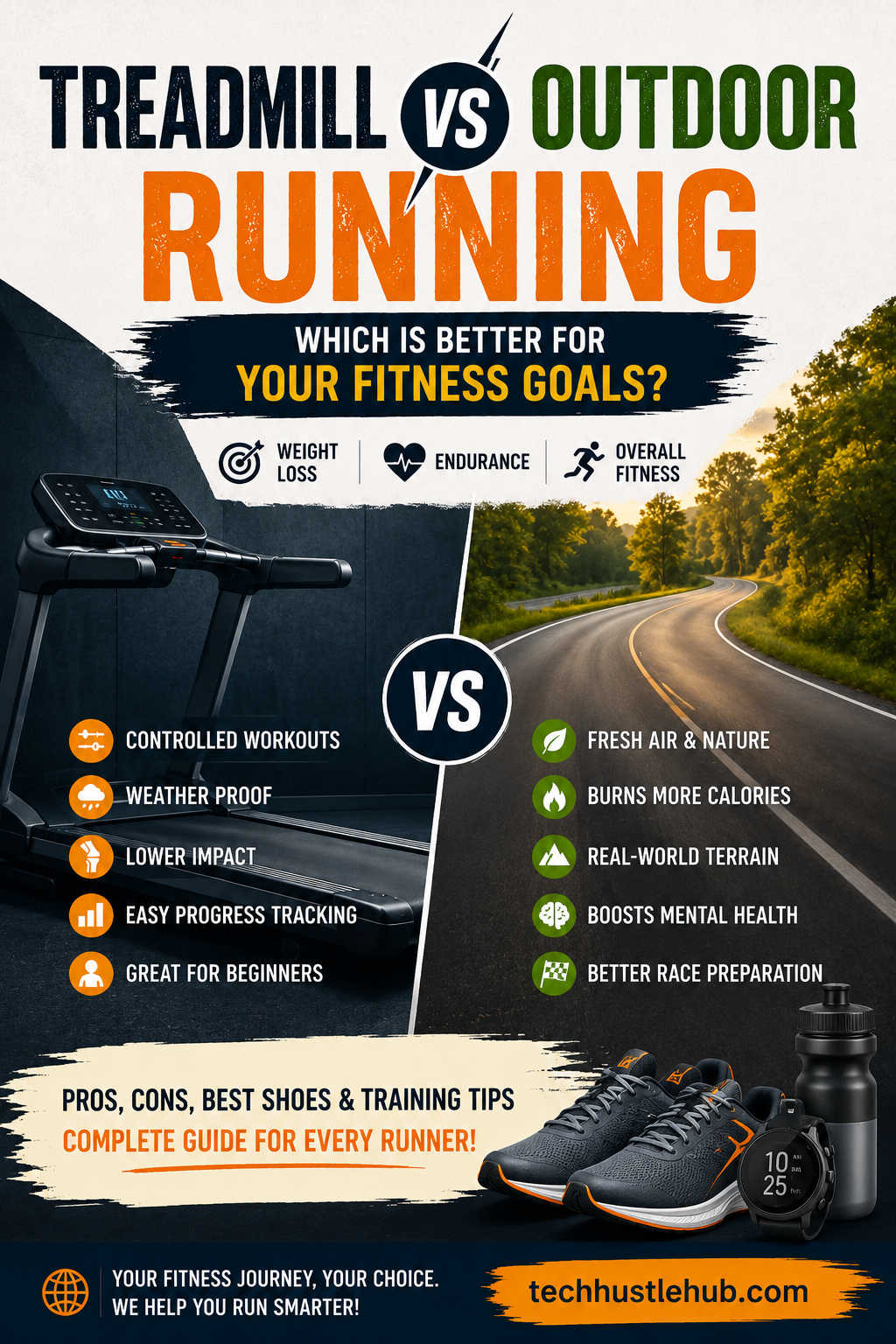
Running remains one of the most effective and affordable ways to improve overall health, burn calories, strengthen the heart, and build mental resilience. Whether someone is trying to lose weight, improve endurance, stay active, or train for a marathon, running can deliver impressive physical and mental benefits.
But one question continues to spark debate among beginners and experienced runners alike: is treadmill running better than outdoor running?
Some fitness enthusiasts enjoy the convenience and control of treadmill workouts, while others prefer the freedom and natural challenge of running outdoors. Both forms of running can help improve cardiovascular fitness and support long-term health. However, each offers different advantages depending on personal goals, lifestyle, body condition, and training preferences.
This complete guide breaks down the key differences between treadmill running and outdoor running in a practical way. You will learn how each affects calorie burn, muscle activation, mental health, endurance, joint stress, and workout consistency. By the end, you will know which option best matches your fitness goals and how to combine both for better results.
Understanding the Difference Between Treadmill and Outdoor Running
At first glance, treadmill running and outdoor running may appear almost identical. In both cases, the body performs the same basic movement pattern: one foot lands while the other pushes off to propel the body forward.
However, the running environment changes how the body responds.
A treadmill provides a predictable and controlled surface. Speed, incline, and workout intensity can be adjusted with precision. The environment stays stable regardless of weather or terrain.
Outdoor running introduces natural variables such as wind resistance, hills, uneven ground, temperature changes, and surface variations. These environmental elements make outdoor running feel more dynamic and unpredictable.
Because of these differences, each type of running places unique demands on the body and mind.
Benefits of Treadmill Running
Controlled Training Environment
One of the biggest advantages of treadmill running is control. Everything from speed to incline can be adjusted instantly. This allows runners to structure workouts with remarkable precision.
A treadmill makes it easier to maintain:
Steady pacing
Heart rate zones
Interval sessions
Recovery runs
Progressive training plans
For beginners, this consistency can make workouts less intimidating and easier to follow.
Indoor running also eliminates concerns related to weather, traffic, pollution, or unsafe roads. Whether it is raining heavily, extremely hot, or dark outside, treadmill workouts remain accessible.
This convenience often improves long-term workout consistency, which is one of the most important factors in achieving fitness goals.
Lower Impact on Joints
Modern treadmills typically include cushioned running surfaces designed to reduce impact stress. Compared to concrete roads or sidewalks, treadmill belts absorb more shock during foot strikes.
This can help reduce strain on:
Knees
Ankles
Hips
Lower back
People recovering from injuries or dealing with joint discomfort often find treadmill running more comfortable than outdoor running.
Older adults and overweight beginners may also benefit from the softer surface while building fitness safely.
Better Workout Tracking
Treadmills make it simple to monitor progress in real time. Most machines display:
Distance
Speed
Calories burned
Incline
Heart rate
Workout duration
This data-driven approach helps runners stay motivated and measure improvement accurately.
Fitness enthusiasts who enjoy structured programs often prefer treadmills because of their precision and predictability.
Safer for Certain Situations
Indoor running removes many environmental risks associated with outdoor workouts.
Treadmills eliminate concerns such as:
Traffic accidents
Poorly lit streets
Uneven sidewalks
Bad weather
Stray animals
Air pollution
People who feel uncomfortable running outdoors alone may find treadmills safer and more convenient.
Excellent for Interval Training
Treadmills are highly effective for high-intensity interval training (HIIT). Since speed changes happen instantly, runners can switch between sprinting and recovery periods without guessing their pace.
For example:
1 minute sprint
2 minutes recovery jog
Repeat 8–10 times
This type of training can improve cardiovascular endurance while supporting fat loss.
Disadvantages of Treadmill Running
Can Feel Mentally Repetitive
One of the most common complaints about treadmill workouts is boredom.
Running in the same place without changing scenery can feel mentally draining, especially during long sessions. Even with music, television, or podcasts, some people struggle to stay engaged.
Outdoor environments naturally provide stimulation through changing scenery, people, traffic, and weather conditions.
Reduced Natural Resistance
Treadmills remove some of the resistance experienced outdoors, especially wind resistance. The moving belt also assists leg turnover slightly compared to pushing against the ground outdoors.
As a result, outdoor running may require slightly more effort at the same pace.
Some runners compensate by adding a small incline, usually around 1%, to mimic outdoor conditions more closely.
Less Muscle Engagement
Outdoor surfaces constantly change. The body must stabilize itself on hills, curves, slopes, trails, and uneven terrain.
Treadmills provide a flatter and more stable running platform, which may reduce activation of stabilizing muscles.
This does not make treadmill running ineffective, but it does create a different physical demand compared to outdoor terrain.
Equipment Costs
High-quality treadmills can be expensive. Gym memberships may also become costly over time.
Outdoor running usually requires little more than proper shoes and comfortable clothing, making it one of the most affordable forms of exercise.
Benefits of Outdoor Running
More Natural Running Experience
Outdoor running feels more natural for many people. The body adapts continuously to changing terrain, slopes, and environmental conditions.
This improves:
Coordination
Agility
Balance
Stability
Functional strength
Trail running, in particular, activates stabilizing muscles throughout the legs and core.
Because outdoor environments constantly change, workouts often feel more engaging and enjoyable.
Stronger Mental Health Benefits
One of the biggest advantages of outdoor running is the mental refreshment it provides.
Exposure to sunlight, trees, parks, rivers, and fresh air can help improve mood and reduce stress levels. Many runners describe outdoor workouts as emotionally energizing and mentally calming.
Outdoor exercise may also help reduce feelings of anxiety and mental fatigue.
Instead of feeling trapped indoors, runners experience movement through changing scenery and open space, which often increases workout enjoyment.
Burns More Calories in Some Conditions
Outdoor running can sometimes burn slightly more calories because the body works against natural resistance.
Factors that increase effort outdoors include:
Wind
Hills
Uneven terrain
Surface instability
Temperature changes
Even small inclines or headwinds require extra energy expenditure.
Although the calorie difference may not be dramatic, outdoor running often feels physically tougher than treadmill running at the same speed.
Better Preparation for Real-World Races
Anyone training for a road race, marathon, or trail event should spend time running outdoors.
Outdoor training teaches the body how to handle:
Wind resistance
Elevation changes
Temperature shifts
Uneven surfaces
Pacing challenges
These real-world conditions cannot be fully replicated indoors.
Runners who train exclusively on treadmills may struggle when transitioning to outdoor races.
More Enjoyable for Long Runs
Many runners find outdoor long-distance sessions easier mentally because the environment changes constantly.
Running through parks, neighborhoods, beaches, or trails creates a sense of exploration that helps reduce boredom.
For endurance athletes, this mental stimulation can make a huge difference during longer workouts.
Disadvantages of Outdoor Running
Weather Limitations
Weather is one of the biggest obstacles to outdoor running consistency.
Extreme heat, humidity, rain, snow, or cold temperatures can make workouts uncomfortable or unsafe.
Hot conditions increase dehydration risk, while icy roads raise the chance of slipping injuries.
Treadmills eliminate these environmental barriers entirely.
Higher Injury Risk from Surfaces
Outdoor runners encounter many unpredictable hazards, including:
Cracked sidewalks
Potholes
Gravel
Curbs
Wet surfaces
Traffic
Hard pavement also creates more impact stress compared to cushioned treadmill belts.
Poor running surfaces can increase the risk of ankle sprains or overuse injuries if runners are not careful.
Harder Pace Control
Outdoor runners must regulate pace manually, which can be difficult for beginners.
Hills, wind, and terrain changes naturally affect running speed. Without experience, many runners start too fast and fatigue quickly.
Treadmills solve this issue by locking the runner into a fixed pace.
Safety Concerns
Outdoor running may feel unsafe in isolated areas or at night.
Common concerns include:
Traffic
Poor visibility
Unsafe neighborhoods
Aggressive animals
Harassment
For some individuals, especially solo runners, treadmill workouts may feel significantly safer.
Treadmill vs Outdoor Running for Weight Loss
Both treadmill and outdoor running can support effective fat loss when paired with proper nutrition.
The most important factor for weight loss is consistency.
A person who runs regularly three to five times per week will typically see better results than someone choosing the “perfect” running method but exercising inconsistently.
Why Treadmills Work Well for Weight Loss
Treadmills make it easier to follow structured fat-loss workouts such as:
Incline walking
Interval training
Steady-state cardio
Heart rate-based sessions
Incline treadmill workouts can significantly increase calorie burn while reducing joint impact.
Many beginners also feel more comfortable starting indoors, helping them stay consistent.
Why Outdoor Running Helps Weight Loss
Outdoor running often feels less repetitive, which may encourage longer sessions.
Natural terrain changes also increase energy expenditure slightly, especially on hills or trails.
For people who enjoy nature and fresh air, outdoor workouts can improve motivation and make exercise feel less like a chore.
Which Is Better for Building Endurance?
Treadmills for Endurance
Treadmills are excellent for controlled endurance sessions because pace remains stable throughout the workout.
This helps runners maintain:
Aerobic training zones
Tempo pace
Recovery intensity
Progressive overload
Long treadmill sessions can improve cardiovascular endurance effectively.
Outdoor Running for Endurance
Outdoor running develops mental toughness and adaptability.
Real-world conditions challenge the body in ways treadmills cannot fully simulate.
Wind resistance, terrain variation, and pacing adjustments help build stronger race-specific endurance.
For marathon and half-marathon preparation, outdoor training is usually essential.
Which Is Better for Beginners?
Beginners often benefit from starting with treadmill workouts because the environment feels more controlled and less intimidating.
A treadmill allows new runners to:
Learn pacing
Build stamina gradually
Reduce injury risk
Improve confidence
However, transitioning outdoors eventually becomes important for overall athletic development.
A balanced combination often works best for beginners.
Which Is Better for Joint Health?
For people with knee pain or joint sensitivity, treadmills usually provide a more forgiving running surface.
The cushioning reduces repetitive impact stress, making indoor running easier on the body.
Outdoor surfaces vary significantly. Grass and trails may feel softer, while concrete roads create more impact.
Runners prone to overuse injuries may benefit from alternating between indoor and outdoor sessions.
Treadmill vs Outdoor Running for Mental Motivation
Motivation is highly personal.
Some runners enjoy the comfort and convenience of indoor workouts. Others feel energized only when running outdoors.
Treadmill Motivation Advantages
Climate-controlled environment
Entertainment options
Easier scheduling
Fewer distractions
Outdoor Running Motivation Advantages
Fresh air
Natural scenery
Social interaction
Reduced boredom
Greater sense of freedom
Understanding personal preference is important because enjoyment strongly affects long-term consistency.
Best Running Shoes for Treadmill and Outdoor Running
Choosing the right running shoes can improve comfort, performance, and injury prevention.
Here are some popular running shoe recommendations suitable for both treadmill and outdoor use:
Trail shoes provide better grip and stability for uneven outdoor terrain.
Common Myths About Treadmill and Outdoor Running
Myth 1: Treadmills Are Cheating
Treadmill running still requires cardiovascular effort and muscular endurance. It remains an effective workout for improving fitness and burning calories.
Myth 2: Outdoor Running Is Always Better
Outdoor running has unique benefits, but it is not automatically superior.
The best workout is the one a person can perform consistently and safely.
Myth 3: Treadmills Ruin Running Form
Most runners maintain similar biomechanics indoors and outdoors. Proper posture and technique matter more than the running location itself.
The Best Strategy: Combining Both
Many experienced runners use both treadmill and outdoor workouts strategically.
This hybrid approach provides several advantages:
Better variety
Reduced boredom
Flexible scheduling
Improved race preparation
Lower injury risk
More balanced muscle development
For example:
Treadmill workouts during bad weather
Outdoor runs on weekends
Treadmill intervals for pacing
Outdoor long runs for endurance
Combining both environments often creates the most sustainable long-term routine.
Frequently Asked Questions
Is treadmill running easier than outdoor running?
Treadmill running may feel easier because there is no wind resistance or terrain variation. However, workout intensity depends largely on speed, incline, and duration.
Can treadmill running help lose belly fat?
Yes. Treadmill workouts burn calories and improve cardiovascular fitness, both of which support overall fat loss when combined with proper nutrition.
Is outdoor running better for mental health?
Many people experience greater mental health benefits outdoors because of fresh air, sunlight, and natural scenery.
Should beginners start on a treadmill?
Treadmills are often beginner-friendly because they provide a controlled and predictable environment.
Is outdoor running harder on the knees?
Concrete surfaces may place more stress on joints compared to cushioned treadmills. Softer outdoor surfaces like grass or trails may reduce impact.
Which burns more calories: treadmill or outdoor running?
Outdoor running can burn slightly more calories due to environmental resistance, but the difference is usually modest.
Final Thoughts
The treadmill versus outdoor running debate does not have a universal winner.
Both forms of running can improve cardiovascular health, increase endurance, support weight loss, and strengthen mental resilience. The better option depends entirely on personal goals, preferences, physical condition, and lifestyle.
Choose treadmill running if you prioritize:
Convenience
Controlled workouts
Joint comfort
Safety
Weather independence
Choose outdoor running if you prefer:
Fresh air
Natural scenery
Dynamic terrain
Mental stimulation
Race preparation
For most people, the smartest approach is not choosing one over the other. It is learning how to use both effectively.
A balanced combination of treadmill and outdoor running can improve motivation, reduce burnout, support injury prevention, and create a more enjoyable fitness journey overall.
The most effective running plan is always the one you can maintain consistently over time.