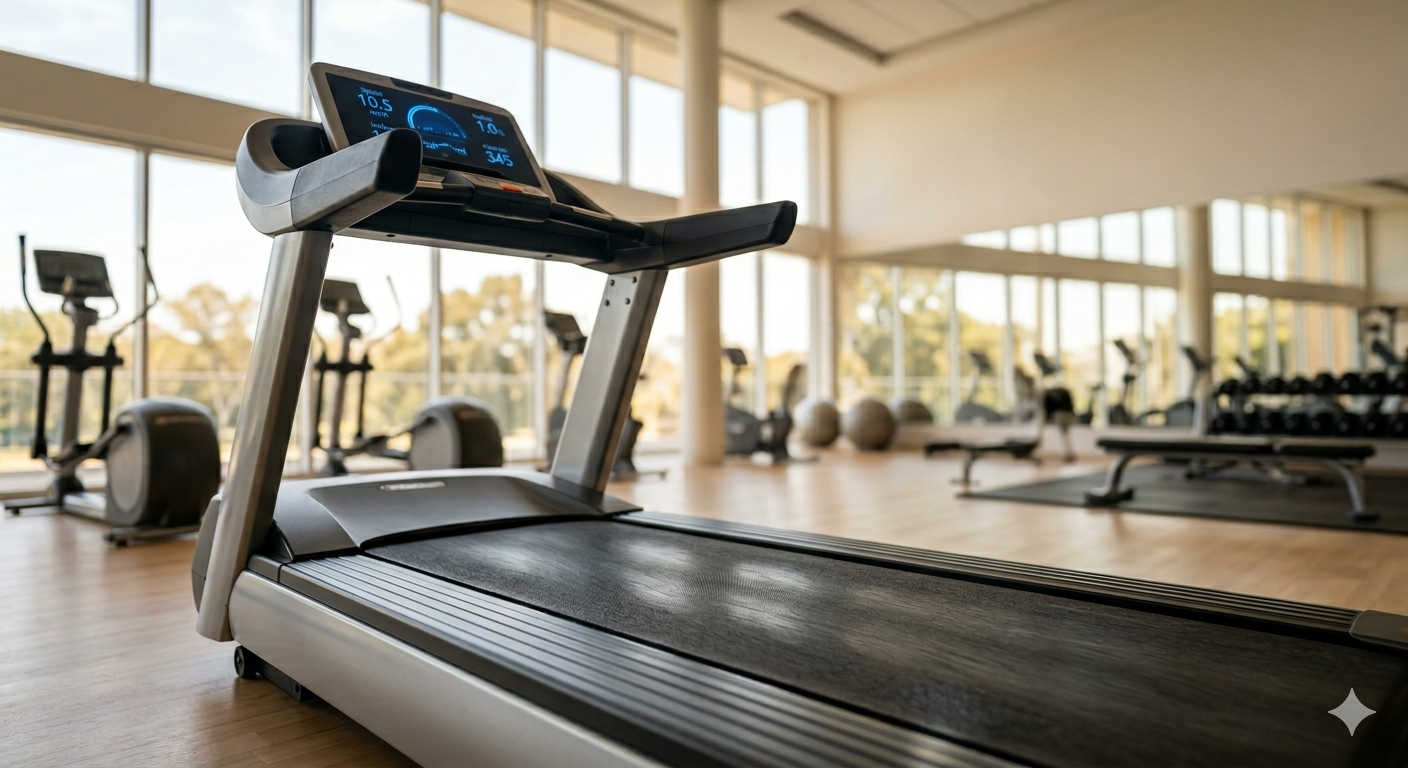
Most people only hop on a treadmill when the weather turns bad. Rain rolls in, the sidewalk disappears under a layer of ice, or the afternoon heat makes outdoor running feel punishing — and suddenly, the treadmill becomes the backup plan. But thinking of it as a fallback is a mistake. When used intentionally, a treadmill is one of the most effective and precise training tools available to any runner, regardless of fitness level.
Here is what makes it genuinely useful: you control everything. Speed, incline, duration — all of it sits at your fingertips, adjustable in real time. There are no traffic lights, no uneven pavements, no unexpected hills that wreck your pacing. For someone just starting out, that predictability removes a lot of anxiety. For an experienced runner chasing specific performance targets, that control becomes a powerful training advantage.
This guide is built for two groups of people. The first group is just getting started — maybe you have never consistently run before, or you are coming back after a long gap. The second group can already run for 30 minutes or so but wants workouts that push them further: faster times, better endurance, stronger legs. Both groups will find structured, practical plans here, along with honest advice on what actually moves the needle and what wastes your time.
Before jumping into any workout plan, it helps to understand a few fundamentals about how the machine works and how your body behaves on it.
Speed and Incline — What the Numbers Mean
Speed on a treadmill is typically displayed in miles per hour (mph) or kilometers per hour (km/h). Most beginners feel comfortable walking briskly between 3.0 and 3.5 mph, and running somewhere in the 4.5 to 5.5 mph range. Intermediate runners often train between 5.5 and 8.5 mph depending on the type of session.
Incline mimics the natural resistance of outdoor running. Here is something most people do not know: running on a flat treadmill at 0% incline is actually slightly easier than running on flat ground outdoors, because the moving belt assists your stride. Setting the incline to just 1% corrects for this and makes your effort more accurately reflect real-world running. For most sessions, 1% is your baseline. Anything higher starts to feel like hill running — which is a workout in itself.
A Safety Habit Worth Building
Always clip the emergency cord to your clothing before you start. It sounds overly cautious until the one day you lose your balance and it saves you from an unpleasant encounter with the belt. Beyond that, always begin each session with the treadmill at a low walking speed and build up gradually. Never step onto a belt that is already moving at speed.
The One Form Error Treadmill Runners Make Most
Runners on treadmills tend to shorten their stride and look down at the display. Both habits create problems over time. Looking down rounds your shoulders, compresses your chest, and makes breathing harder. Shortening your stride disrupts natural gait mechanics. Keep your eyes level — imagine looking at a point on the wall ahead of you — and let your stride feel as natural as it would outside. Your arms should swing in a relaxed forward-and-back motion, not crossing your body. Grip the handrails only if you genuinely need balance support, because leaning on them reduces the workload and skews the accuracy of any calorie estimates.
Treadmill Workouts for Beginners: Building Your Foundation
If running is new to you — or if you are returning after months or years away — your first priority is not speed. It is not distance either. It is consistency. Getting your body used to running regularly, without injury, is the single most important thing you can do in the first six weeks.
The Run-Walk Method: Why It Works Better Than Just Running
A lot of beginners make the same mistake. They step on the treadmill, set a running pace, and push until they cannot go any further — which often happens within five minutes. They feel defeated, their legs ache for two days, and motivation evaporates.
The run-walk method sidesteps this entirely. Instead of running until failure, you run for a short, controlled interval, then walk to recover, then run again. What happens over time is remarkable: your running intervals get longer, your walk breaks get shorter, and one day you realize you have been running for 25 minutes straight without thinking about it.
The method works because it lets your cardiovascular system, muscles, tendons, and joints adapt at a pace they can actually handle. Running creates mechanical stress on your body — which is a good thing, because adaptation to that stress is what makes you fitter and stronger. But adaptation takes time. The run-walk approach gives your body that time.
Beginner Workout 1 — The First Two Weeks
This session is designed to feel manageable. If it feels easy, that is fine. You are laying the groundwork.
Session duration: 20 to 25 minutes | Frequency: 3 sessions per week
Phase
Speed
Incline
Time
Warm-Up Walk
3.0–3.5 mph
0%
3 minutes
Run
4.5–5.0 mph
1%
1 minute
Walk Recovery
3.0–3.5 mph
0%
2 minutes
Repeat Run/Walk
—
—
6 to 8 rounds
Cool-Down Walk
2.5–3.0 mph
0%
3 minutes
During your running intervals, you should be able to say a short sentence out loud. If you cannot speak at all, you are going too fast. Dial it back. There is no badge for suffering through the first week — there is only the risk of not making it to week two.
Beginner Workout 2 — Weeks Three and Four
By now, one-minute running intervals should feel manageable. This session extends them to two minutes and slightly reduces the walking recovery, asking your body to do a little more work before getting its break.
Session duration: 25 to 30 minutes | Frequency: 3 sessions per week
Phase
Speed
Incline
Time
Warm-Up Walk
3.0–3.5 mph
0%
3 minutes
Run
5.0–5.5 mph
1%
2 minutes
Walk Recovery
3.0 mph
0%
1 minute
Repeat Run/Walk
—
—
7 to 8 rounds
Cool-Down Walk
2.5–3.0 mph
0%
3 minutes
Pay attention to how your breathing changes across weeks three and four. Most people notice it becoming quieter and more controlled — that is your aerobic system getting more efficient. That is exactly the adaptation you are after.
Beginner Workout 3 — Weeks Five and Six
This is the milestone session: your first continuous run. No walk breaks. Just you and the belt for 20 to 25 uninterrupted minutes.
Session duration: 30 minutes | Frequency: 3 sessions per week
Phase
Speed
Incline
Time
Warm-Up Walk
3.0–3.5 mph
0%
3 minutes
Steady Run
5.0–5.5 mph
1%
20 to 25 minutes
Cool-Down Walk
2.5–3.0 mph
0%
3 to 5 minutes
If 5.0 mph feels too fast, drop to 4.5 mph and hold the continuous effort. The speed does not matter nearly as much as the unbroken duration. Running continuously for 20 minutes — no matter how slowly — is a meaningful physiological milestone. Your heart, lungs, and legs are now ready for something more structured.
A Smarter Way to Gauge Effort: The RPE Scale
Tracking pace and heart rate is useful, but for beginners, the Rate of Perceived Exertion (RPE) scale is often more practical. It runs from 1 to 10 and measures how hard you feel like you are working.
An RPE of 3 to 4 feels like a brisk walk. RPE of 5 to 6 is comfortable running — slightly breathless but conversational. RPE of 7 to 8 is hard effort where full sentences become difficult. And, an RPE of 9 to 10 is an all-out sprint that cannot be sustained for more than a minute or two.
Beginners should spend most of their running time at RPE 5 to 6. This zone builds your aerobic engine steadily without hammering your recovery. The temptation to push harder is real — resist it, especially in the early weeks.
Beginner Weekly Schedule
Day
Activity
Duration
Monday
Beginner Workout (Run-Walk)
20–25 min
Tuesday
Rest or gentle stretching
—
Wednesday
Beginner Workout (Run-Walk)
20–25 min
Thursday
Rest
—
Friday
Beginner Workout (Run-Walk)
20–25 min
Saturday
Optional easy walk
20 min
Sunday
Full rest
—
Treadmill Workouts for Intermediate Runners: Going Further and Faster
Once you can run for 30 minutes continuously without stopping, the rules of training change. Your aerobic base is established. Now the goal shifts toward improving speed, raising your lactate threshold, and building the kind of leg strength and cardiovascular capacity that translates into faster race times and stronger long runs.
Intermediate training introduces a concept that beginners do not need to worry about yet: structured stress and recovery cycles. A hard training session creates stress in your muscles and energy systems. Given adequate recovery — usually 24 to 48 hours — your body rebuilds those systems slightly stronger than before. Over weeks and months, these small adaptations stack into meaningful improvement.
This means your easy days are not throwaway sessions. They are part of the plan. A runner who trains hard every single day without recovery does not get fitter faster — they get injured, burned out, or both.
Intermediate Workout 1 — Classic Speed Intervals
Speed interval training is the most direct route to running faster. By running at a pace harder than your comfortable cruising speed, you teach your body to process lactic acid more efficiently, improve neuromuscular coordination, and expand your cardiovascular ceiling.
Session duration: 35 to 40 minutes | Frequency: 1 to 2 times per week
Phase
Speed
Incline
Time
Warm-Up Jog
5.0–5.5 mph
1%
5 minutes
Fast Interval
7.0–8.0 mph
1%
1 minute
Recovery Jog
5.0 mph
1%
2 minutes
Repeat Intervals
—
—
6 to 8 rounds
Cool-Down Jog
4.5–5.0 mph
0%
5 minutes
Your fast intervals should feel genuinely hard — RPE 7 to 8. You should be relieved when they end. The recovery jogs between intervals are not optional padding; they allow your heart rate to drop enough that the next hard interval can be run with proper effort.
Intermediate Workout 2 — The Incline Pyramid
Hill running builds leg strength that flat running simply cannot replicate. Your glutes, hamstrings, and calves work significantly harder on an incline, and the cardiovascular demand climbs noticeably. The pyramid structure here takes you gradually up in grade and then back down, creating a natural arc of effort across the session.
Session duration: 35 to 40 minutes | Frequency: Once per week
Phase
Speed
Incline
Time
Warm-Up Walk/Jog
3.5 to 5.0 mph
0%
5 minutes
Incline Stage 1
5.5 mph
2%
3 minutes
Incline Stage 2
5.5 mph
4%
3 minutes
Incline Stage 3
5.0 mph
6%
3 minutes
Incline Stage 4
4.5 mph
8%
3 minutes
Descent Stage 3
5.0 mph
6%
3 minutes
Descent Stage 2
5.5 mph
4%
3 minutes
Descent Stage 1
5.5 mph
2%
3 minutes
Cool-Down Walk
3.0 mph
0%
5 minutes
Reduce your speed as the incline climbs — fighting to maintain pace on a steep grade often leads to hunching forward and poor form. A slight forward lean at high inclines is natural and biomechanically correct; leaning backward is not. Keep your core engaged and let your glutes do the heavy lifting.
Intermediate Workout 3 — The Tempo Run
A tempo run sits at the outer edge of your comfort zone — faster than a conversational jog, slower than a full sprint. It is the pace where you can still function, but your body is working hard to maintain it. Physiologically, this effort sits right around your lactate threshold, the point at which your body produces lactic acid faster than it can remove it. Training at this intensity pushes that threshold higher over time, which is what allows you to run faster for longer without accumulating fatigue as quickly.
Session duration: 35 to 45 minutes | Frequency: Once per week
Phase
Speed
Incline
Time
Warm-Up Jog
5.0–5.5 mph
1%
10 minutes
Tempo Effort (RPE 7–8)
6.5–7.5 mph
1%
20 minutes
Cool-Down Jog
4.5–5.0 mph
0%
5 to 10 minutes
The tempo effort should feel uncomfortably sustainable — you can manage it, but you would not want to keep going much longer. If you can hold a full conversation during the tempo section, increase the pace slightly. If you cannot say anything at all, back off a touch. That middle ground is exactly where the adaptation happens.
Intermediate Workout 4 — The 30-20-10 Protocol
This training format has become popular among time-pressed runners who want serious physiological results from compact sessions. Each one-minute cycle moves through three different effort levels: 30 seconds easy, 20 seconds moderate, and 10 seconds at near-maximum sprint effort. The effect is deceptively powerful.
Session duration: 30 minutes | Frequency: 1 to 2 times per week
Effort Level
Speed
Duration per Cycle
Easy (RPE 4–5)
5.0 mph
30 seconds
Moderate (RPE 6–7)
6.5 mph
20 seconds
Sprint (RPE 9+)
8.5 to 10.0 mph
10 seconds
Full session structure: Begin with a 5-minute easy warm-up jog. Then complete 5 consecutive cycles of the 30-20-10 pattern — that is 5 minutes of high-variation effort. Follow with 2 minutes of easy walking to recover, then repeat the entire block 3 to 4 more times. Finish with a 5-minute cool-down walk.
What makes those 10-second sprints worth the effort is the physiological response they trigger. Your fast-twitch muscle fibers fire at full recruitment, your heart rate spikes sharply, and your body draws on anaerobic energy systems that steady-state running rarely touches. That combined stimulus produces adaptation across multiple systems at once — aerobic capacity, speed, and muscular power — which explains why this format delivers strong results in a short training window.
Intermediate Workout 5 — Long Slow Distance Run
Every intermediate runner needs at least one long, genuinely easy run per week. Not because it is exciting — it is not — but because sustained low-intensity running builds mitochondrial density in your muscle cells, trains your body to use fat as fuel more efficiently, and develops the mental stamina that makes race distances feel manageable when you get to them.
Session duration: 45 to 75 minutes | Frequency: Once per week
Phase
Speed
Incline
Time
Warm-Up Walk
3.0–3.5 mph
0%
5 minutes
Easy Steady Run (RPE 5)
5.0–6.0 mph
1%
40 to 65 minutes
Cool-Down Walk
3.0 mph
0%
5 minutes
If you feel the urge to run faster during a long slow distance session, resist it. The pace should feel genuinely easy — almost too easy. The benefit lives in the duration, not the intensity. Many runners find that covering this session while listening to a podcast or audiobook makes the time pass naturally and makes the session something to look forward to rather than endure.
Intermediate Weekly Training Schedule
Day
Session
Duration
Monday
Tempo Run
40 minutes
Tuesday
Easy recovery jog or cross-training
30 minutes
Wednesday
Speed Intervals or 30-20-10
35 to 40 minutes
Thursday
Rest or mobility work
—
Friday
Incline Pyramid
35 to 40 minutes
Saturday
Long Slow Distance Run
45 to 75 minutes
Sunday
Full rest
—
What Separates Runners Who Improve from Those Who Plateau
Following a structured plan matters. But there are several supporting factors that determine whether that plan produces results or quietly falls apart over time.
Warm-Up and Cool-Down Are Part of the Workout
A 3 to 5 minute walking warm-up is not a formality. It raises your core body temperature, increases blood flow to working muscles, and lubricates your joints before they handle the impact of running. Skipping it — especially in a cooler gym environment — raises the likelihood of calf tightness, Achilles irritation, and IT band problems over time.
An equal cool-down walk at the end of each session helps your cardiovascular system step down gradually rather than halting abruptly. It also reduces the amount of muscle soreness you carry into the next session, which matters greatly when you are trying to train consistently across the week.
Staying Hydrated on Indoor Runs
Most gym environments have limited airflow compared to running outside, which means your sweat evaporates more slowly and you may overheat faster than expected. On any run longer than 30 minutes, keep a water bottle accessible and take small sips every 15 to 20 minutes. You do not need sports drinks for sessions under an hour — plain water is plenty. For longer efforts, an electrolyte supplement can prevent the sluggish, slightly headachy feeling that comes from sodium and potassium loss through prolonged sweating.
Managing Boredom — Because It Is a Real Factor
Treadmill running demands more mental engagement than outdoor running simply because your environment does not change. The streets, other people, and shifting scenery that occupy your attention outdoors are replaced by a fixed screen or a gym wall. Over time, that static environment quietly erodes motivation and makes sessions feel longer than they are.
A few things work consistently well. Running to music with a tempo that roughly matches your stride rate gives your brain an anchor and has been shown to reduce perceived effort. Creating a playlist you only use during treadmill runs builds a psychological association between that music and productive training. Podcasts and audiobooks work well for easy and long slow distance sessions where you are not breathing too hard to follow along. For hard interval sessions, music tends to work better because your focus needs to stay physical rather than narrative.
Covering the treadmill’s time display and checking it only occasionally is another trick worth trying. Watching seconds tick by during a fast interval is an exercise in psychological torture. Not knowing exactly how much time has passed makes sessions feel shorter.
The 10% Rule — Do Not Skip This One
One of the most consistent reasons recreational runners get hurt is progressing too quickly. Your cardiovascular system adapts to new training demands faster than your tendons, ligaments, and bones can keep up with. That gap between systems is where overuse injuries are born.
The 10% rule is simple: do not increase your total weekly running volume by more than 10% from one week to the next. If you run 60 minutes total this week, cap next week at 66 minutes. It feels slower than you want to go. But runners who follow it stay healthy and train consistently — which ultimately produces far more long-term progress than runners who ramp up aggressively, get hurt, and spend three weeks on the couch.
Gear Worth Considering
You do not need expensive equipment to follow these workouts, but the right gear makes training noticeably more comfortable and effective over time.
Running shoes are the most important investment by a considerable margin. A properly fitted pair reduces impact stress and supports your natural gait pattern. Brands like Brooks, ASICS, New Balance, and Hoka all offer strong options suited to treadmill training across different arch types and foot strike patterns. If possible, visit a specialty running store for a brief gait assessment before buying — it takes around 10 minutes and eliminates a lot of costly guesswork.
A fitness tracker or GPS watch makes it easier to monitor heart rate, pace, and session duration without fixating on the treadmill display. The Garmin Forerunner series and Apple Watch both work well for indoor running. Many models can detect cadence and estimate distance even without GPS signal, which makes them genuinely useful on the treadmill.
Wireless sport earbuds make a meaningful difference in training consistency when the session feels long or monotonous. Look for a sweat-resistant design with a secure fit that stays in place at higher speeds. The Jabra Elite Active series, Sony WF-SP800N, and Beats Powerbeats Pro 2 all perform reliably during vigorous exercise.
A wide-mouth hydration bottle placed in the treadmill’s cup holder removes the friction of drinking during longer sessions. Models like the Nathan SpeedDraw Plus or a standard Nalgene wide-mouth bottle are practical, easy to open mid-run, and do not require you to stop or slow down significantly.
For runners training at home on their own machine, a treadmill equipment mat placed under the unit reduces vibration noise and protects flooring, particularly on hard surfaces like hardwood or tile.
How to Know When You Are Ready to Move from Beginner to Intermediate
There is no universal graduation date, and comparing your timeline to someone else’s is counterproductive. Bodies adapt at genuinely different rates, and that variability is entirely normal and expected.
Practically speaking, you are ready for intermediate training when you can run 30 minutes continuously at a comfortable effort level on three separate days within a single week, with full recovery between sessions. If completing those three runs leaves you exhausted for days afterward, hold at the beginner level a while longer. If you finish them feeling like you had more in reserve, your body is telling you it can handle more challenge.
Most people reach this threshold somewhere between six weeks and four months of consistent beginner training. Both timelines are completely fine.
Common Mistakes That Quietly Kill Progress
Running hard every single session. This is the most widespread error in recreational running. Going all-out every day prevents proper recovery, stalls adaptation, and sets the stage for burnout or injury. Easy sessions are not wasted effort — they are how your aerobic base expands.
Ignoring incline entirely. Flat treadmill running at 0% incline leaves training adaptations on the table and makes the eventual return to outdoor running feel harder than necessary. A 1% baseline is a small change with meaningful long-term benefit.
Holding the handrails during intervals. It feels like it helps maintain speed, but it fundamentally alters your running mechanics, reduces caloric expenditure, and obscures the true difficulty of the session. If a speed requires the handrails to sustain, that speed is too fast for that workout.
Running through persistent pain. Muscle fatigue and general tiredness after a hard session are normal and expected. Sharp, localized pain — particularly around joints, the shin, or the heel — is not. Running through pain that worsens over consecutive sessions turns a minor irritation into a real injury. Rest, assess, and if the pain persists, consult a sports physiotherapist before returning.
Underestimating the role of sleep. Training adaptation happens during rest, and the most critical form of rest is sleep. Seven to nine hours per night is not a luxury for active people — it is when your muscles repair, hormones reset, and the cardiovascular work you did during the day gets consolidated into actual fitness gains.
Frequently Asked Questions
Is treadmill running as effective as running outdoors?
For building cardiovascular fitness and burning calories, treadmill running at a 1% incline is functionally comparable to flat outdoor running. The differences lie in things like wind resistance, surface variation, and the psychological engagement of a changing environment. Outdoor running also demands slightly more lateral stabilization, which recruits small stabilizer muscles a treadmill does not challenge as directly. That said, neither format is clearly superior — both deliver real benefits, and using both when possible gives you the widest range of adaptation.
How many days per week should a beginner run on the treadmill?
Three days per week is the right starting point for most beginners. Running on alternating days — Monday, Wednesday, and Friday, for example — gives your body 24 to 48 hours of recovery between sessions. That window is when adaptation actually happens. Adding a fourth day too soon, before joints and connective tissue have adjusted to the impact load, is one of the fastest paths to shin splints and overuse injuries.
What treadmill speed is right for a beginner?
There is no single correct answer because fitness levels vary significantly between individuals. A useful target for most beginners is a running pace at which you can still say a short phrase out loud — something like “I’m doing okay” — without gasping. For many people, that sits between 4.5 and 5.5 mph. Start conservatively and only increase speed once the current pace genuinely feels easy, not just manageable.
Can treadmill running help with weight loss?
Running is a meaningful calorie-burning activity and can support weight loss when paired with a sustainable approach to eating. The key word is paired. Running alone, without attention to overall energy balance, often produces less change in body weight than people anticipate — partly because regular exercise tends to increase appetite. A more productive mindset is to focus on building a healthier, more capable body through consistent training. Changes in body composition tend to follow naturally from there.
Why does running feel harder on a treadmill than outside?
The indoor environment contributes more than most people expect. Less airflow means your body retains heat more effectively, which elevates your heart rate at any given pace compared to cooler outdoor conditions. The visual monotony of the environment also increases perceived effort — without changing scenery, your brain has less external input to draw attention away from the discomfort of hard exercise. Structured workouts with intervals, music with a strong beat, and entertainment all help considerably with this.
Do I need to stretch before getting on the treadmill?
Static stretching — holding a position for 20 to 30 seconds — is generally not recommended immediately before running because it temporarily reduces the elastic responsiveness of muscle and tendon tissue. Instead, begin with a 3 to 5 minute walking warm-up to raise tissue temperature, then do a short dynamic sequence if you like: leg swings, hip circles, and high-knee marches for 30 to 60 seconds each. Save prolonged static stretching for after the workout, when muscles are warm and the stretching will genuinely contribute to recovery and long-term flexibility.
How long should a beginner’s treadmill session be?
Twenty to thirty minutes — including the warm-up and cool-down walks — is a practical and sustainable target for the first few weeks. That duration is long enough to create real cardiovascular stimulus without accumulating excessive impact stress on joints that are still adapting to regular running. As your fitness improves over weeks and months, session length can extend naturally. There is no advantage to rushing that process — the body will tell you when it is ready for more.
A Final Word on Staying the Course
Training plans are useful. Gear helps. Understanding the physiology behind why certain workouts work — all of that matters. But none of it matters as much as simply showing up, session after session, over an extended period of time.
Progress in running is rarely dramatic from one week to the next. What it is instead is cumulative. A runner who completes three 25-minute sessions this week, three slightly longer sessions next week, and keeps that rhythm going for four months ends up in a fundamentally different physical condition than when they started — stronger legs, a more efficient heart, better breathing economy, and improved mental resilience under hard effort.
The treadmill does not care what pace you run. It does not judge your form or compare you to the person on the next machine. It gives you a controlled, consistent environment to do the work. What you bring to it — patience, honesty about where you are starting from, and the willingness to keep coming back — is entirely up to you.