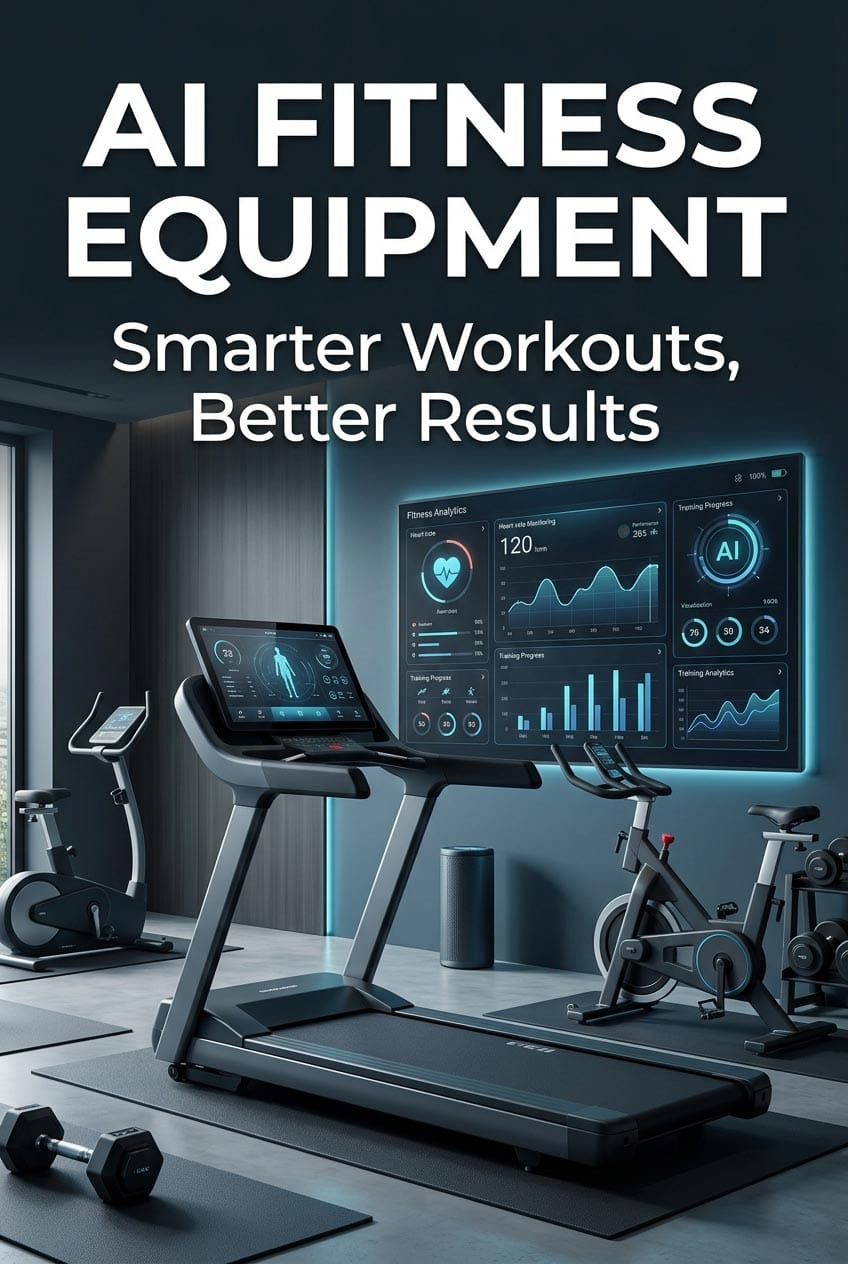
Artificial intelligence is changing how people exercise, track progress, and build healthier habits. From connected treadmills that adjust running programmes to smart strength-training machines that analyse movement, modern fitness equipment can do much more than count repetitions or display workout statistics.
AI-powered fitness equipment uses sensors, software, and performance data to deliver more personalised training experiences. It can help users choose suitable workout intensities, monitor improvements, identify potential technique issues, and adjust training plans as their fitness levels change. For people who exercise at home, these features can bring some of the benefits of structured coaching into a more convenient setting.
However, not every smart fitness machine offers genuine AI capabilities, and more technology does not automatically lead to better results. Understanding how these systems work can help you decide which features are worth paying for and how to use them effectively.
This guide explains how AI improves workouts, which types of smart fitness equipment offer the most practical benefits, what limitations to consider, and how to get better results from intelligent training technology.
Smart fitness equipment combines exercise machines with digital technology that records activity, measures performance, or connects to fitness applications. AI-powered equipment goes a step further by analysing information and using it to generate recommendations, recognise patterns, or personalise certain aspects of a workout.
A traditional treadmill lets you control your speed and incline manually. A connected treadmill might also record your running distance, heart rate, and pace. An AI-enabled system could use that information to recommend a suitable running speed, adjust a future training session, or identify changes in your performance over time.
The same principle applies to exercise bikes, rowing machines, resistance-training equipment, and connected home gyms.
How Artificial Intelligence Works in Fitness Machines
Most AI fitness systems rely on three main elements: data collection, analysis, and feedback.
First, sensors gather information about your workout. Depending on the device, this might include heart rate, movement speed, resistance, cadence, repetition count, or range of motion. Cameras and wearable devices can provide additional movement or activity data.
Next, software analyses the information. AI algorithms may compare your current performance with previous sessions, identify recurring patterns, and estimate whether your training is progressing as expected.
Finally, the system uses those findings to provide feedback. It might recommend a lighter workout, suggest a change in resistance, offer technique cues, or update a training plan.
Some machines make adjustments automatically, while others simply display recommendations for the user to consider.
It is also important to distinguish between AI and ordinary automation. A treadmill that follows a fixed incline programme is automated, but that alone does not make it AI-powered. A system that analyses performance and adapts its recommendations based on the user’s data offers a more personalised experience.
How AI Personalises Workout Plans
One of the most useful applications of artificial intelligence in fitness is personalised training. A workout that suits an experienced runner may be too demanding for a beginner, while a routine designed for general fitness may not provide enough structure for someone preparing for a cycling event.
AI-powered fitness platforms can use information about your goals, previous workouts, training frequency, and performance to recommend a more suitable programme.
For example, someone who wants to improve cardiovascular endurance might receive a plan that gradually increases exercise duration. A person focused on strength could follow a programme that tracks repetitions, resistance, and progression over time.
This approach can make workouts more relevant to individual needs instead of relying entirely on a standard schedule.
How AI Adapts to Your Fitness Level
Personalisation often begins with basic information about your experience, preferred activities, available training time, and goals. Some systems also use an introductory workout to establish a starting point.
As you continue exercising, the software can compare new results with your previous sessions. If you consistently complete workouts at the intended intensity, it may recommend a small increase in difficulty. If your performance drops repeatedly, it might suggest maintaining your current workload or choosing a lighter session.
These adjustments can help users progress without making every workout harder than the last.
However, AI recommendations depend on the quality of the information provided. If your fitness profile is inaccurate or the system cannot account for a recent injury, illness, or change in routine, its suggestions may not be appropriate.
For better results, keep your profile updated and treat recommendations as guidance rather than instructions you must always follow.
Real-Time Workout Feedback and Performance Monitoring
During exercise, it can be difficult to judge whether you are working at the right intensity. Beginners may struggle to distinguish a productive challenge from excessive effort, while experienced users may find it difficult to monitor several performance measures at once.
AI-enabled fitness equipment can simplify this process by displaying useful measurements and identifying patterns as your workout progresses.
A smart exercise bike might track cadence, resistance, heart rate, and power output. A connected treadmill could monitor pace and incline while guiding you through a structured running session. Depending on its capabilities, an AI system may use this information to suggest adjustments.
How Real-Time Feedback Improves Training
Suppose you are completing a steady cycling workout. Your goal is to maintain a moderate effort rather than perform at maximum intensity. If your heart rate rises above your intended range, the system might recommend reducing resistance or slowing your cadence.
Similarly, a running platform may suggest adjusting your pace when you repeatedly run faster than the target for an endurance session.
This feedback can help you make informed changes before poor pacing undermines the workout.
Real-time data is not always perfectly accurate, though. Wrist-based heart-rate monitors may produce inconsistent readings during vigorous movement, and calorie estimates are often approximate. If the numbers suddenly look unusual, check the sensor placement and compare the reading with how you actually feel.
The purpose of performance monitoring is to support better decisions, not to make you follow every displayed number without question.
AI-Powered Exercise Form Correction
Correct technique matters in almost every type of exercise. Poor movement patterns can reduce training effectiveness and may contribute to discomfort or injury, particularly when exercises involve heavy resistance or repeated movements.
Some smart fitness systems use cameras, motion sensors, or wearable devices to analyse how a person moves. AI software can then identify certain movement patterns and offer feedback designed to improve consistency.
For example, a compatible system might track the depth and speed of a bodyweight squat or identify changes in movement during a set of strength exercises.
How AI Detects Movement Problems
Many systems use computer vision, a branch of AI that allows software to interpret images and video. The technology can estimate body positions, identify key movement points, and track how those points change during exercise.
The software compares the observed movement with programmed criteria or a reference pattern. If it detects a possible difference, it may display a visual cue or provide an audio instruction.
This can be helpful for people learning basic exercises at home, especially when they do not have access to a trainer during every session.
However, movement analysis has limitations. Poor lighting, camera placement, loose clothing, and restricted visibility can affect the results. Individual differences in mobility and body proportions may also cause movements to look different from a reference model without necessarily being incorrect.
If a system repeatedly gives confusing feedback, reposition the camera, improve the lighting, and check that the exercise is supported by the device. These changes can improve the quality of movement tracking by helping the software capture a clearer view.
For complex exercises, persistent pain, or rehabilitation needs, advice from a qualified fitness professional or physiotherapist is more appropriate than relying on automated feedback alone.
Automatic Resistance and Workout Intensity Adjustments
Some advanced fitness machines can change resistance, speed, or incline during a workout. AI may help determine when adjustments are appropriate, although the exact capabilities vary considerably between products.
A connected bike might increase resistance during a simulated hill climb and lower it during a recovery interval. A smart treadmill could change incline to match a training programme. Certain digital strength-training systems can adjust resistance or recommend a different load based on previous performance.
These features reduce the need to change settings manually and can make structured workouts easier to follow.
How Adaptive Intensity Supports Better Workouts
Consider an interval workout on an exercise bike. You begin with a warm-up, complete several challenging intervals, and finish with a cool-down.
An ordinary programmed workout follows a predetermined schedule. An adaptive system may also consider available performance measurements and recommend adjustments when you struggle to maintain the intended effort.
For example, it might suggest reducing resistance when your cadence falls below the target range or extending a recovery period within the programme’s permitted settings.
This can help make exercise more manageable while preserving the purpose of the workout.
However, automatic adjustments should never remove your control over the equipment. Before using an unfamiliar machine, learn how to reduce the intensity, switch to manual mode, and stop the exercise quickly.
If the machine repeatedly increases the workload beyond what feels manageable, review the training settings and reduce the difficulty. This helps prevent a mismatch between the programmed workout and your actual fitness level.
Heart-Rate Monitoring and AI Training Zones
Heart-rate monitoring is a common feature of smart fitness equipment. AI can make these measurements more useful by interpreting them alongside pace, resistance, workout history, and other available performance data.
Heart rate offers one indication of how hard your cardiovascular system is working. Used appropriately, it can help you manage exercise intensity and understand how your body responds to different activities.
For example, a connected treadmill might track your heart rate during a run and compare it with your pace across several sessions. If the same pace consistently feels more demanding, the system might recommend a lighter workout or prompt you to review your recovery.
Understanding Personalised Heart-Rate Zones
Many training platforms divide exercise into zones based on estimated maximum heart rate or other thresholds. These zones are commonly used to organise low-intensity endurance sessions and more demanding intervals.
AI can help distribute workouts across different intensity levels, depending on your training goals and the system’s capabilities.
However, heart rate is affected by more than exercise intensity. Heat, dehydration, stress, illness, medication, and sleep can all influence readings. Age-based maximum-heart-rate formulas are estimates and may not reflect an individual’s actual limits.
If a heart-rate reading suddenly appears unusually high or low, check the sensor fit and compare it with your symptoms and perceived effort. If you feel dizzy, faint, or experience chest pain, stop exercising and seek appropriate medical help rather than relying on the device’s interpretation.
People with cardiovascular conditions or other relevant medical concerns should seek professional advice before following demanding heart-rate-based programmes.
AI for Fitness Progress Tracking and Performance Analysis
Consistent exercise produces changes that may be difficult to notice from one session to the next. Smart fitness equipment helps solve this problem by recording workout history, while AI can analyse those records to identify longer-term trends.
Instead of focusing only on today’s performance, you can examine how your training has changed over several weeks.
For example, a cycling platform may show that your power output has improved at a similar level of perceived effort. A strength-training system might reveal that you can complete more repetitions with the same resistance. A running app may highlight improvements in pace over a familiar distance.
These insights can help you evaluate whether your current training routine is working.
How AI Identifies Fitness Improvements
Depending on the platform, AI can compare performance across sessions, account for differences in workout conditions, and identify recurring patterns.
It may reveal changes in training frequency, exercise duration, running pace, cycling power, repetition counts, or heart-rate response.
This information can also help identify periods when progress appears to have slowed. If your performance remains unchanged for several weeks, you may need to review your programme, training volume, recovery, or consistency.
Before making major changes, check whether the workouts being compared are genuinely similar. Differences in resistance, terrain, equipment calibration, or exercise duration can make performance comparisons misleading.
It is also important to remember that progress is rarely linear. One difficult session does not mean your training has failed, and an improvement in a single metric does not necessarily indicate better overall fitness.
Use long-term trends to guide decisions rather than treating every measurement as a final verdict.
AI Recovery Recommendations and Fatigue Monitoring
Exercise challenges the body, but recovery allows it to adapt. Training too intensely or too frequently without enough rest can make workouts harder to sustain and may increase the risk of overuse problems.
Some AI-enabled fitness platforms estimate recovery needs by analysing workout intensity, recent training volume, heart-rate patterns, and sleep information from compatible wearables.
Based on these signals, the system may recommend a lighter session, an easier training day, or additional recovery time.
Can AI Tell When You Need a Rest Day?
AI can identify patterns associated with fatigue, but it cannot directly measure every aspect of recovery.
For instance, a wearable may detect poor sleep or an unusually high resting heart rate. These measurements can provide useful clues, but they cannot fully explain why you feel tired or determine whether a specific muscle group has recovered.
If an app recommends a demanding workout when you feel unusually exhausted, unwell, or in pain, do not ignore those symptoms. Reducing the intensity or taking a rest day may be more appropriate.
Likewise, a low recovery score does not automatically mean you must avoid all activity. Depending on how you feel, gentle walking or low-intensity movement may still be suitable.
Recovery technology is most helpful when combined with sensible training, adequate sleep, appropriate nutrition, and awareness of your own physical condition.
Virtual AI Fitness Coaches
AI-powered coaching platforms aim to make structured exercise more accessible. Rather than relying entirely on a prewritten training plan, users may receive workout suggestions based on their goals, schedule, and previous performance.
Some systems offer guided sessions with on-screen demonstrations and voice instructions. Others provide conversational interfaces that answer basic questions about training plans, exercise selection, or progress.
For example, someone with only 20 minutes available might receive a shorter workout designed around their preferred equipment. A person returning to exercise after a long break may be guided toward a gradual schedule instead of an unnecessarily demanding programme.
AI Fitness Coaches Versus Human Trainers
One of the main advantages of AI coaching is convenience. It can provide guidance whenever the equipment is available, record workout history automatically, and suggest what to do next.
It may also help users who find it difficult to organise a training schedule on their own.
However, AI cannot fully replicate the judgment and personal interaction of an experienced human trainer. A qualified professional can ask detailed follow-up questions, observe movement in context, account for individual circumstances, and recognise when a recommendation needs to change.
AI-generated advice can also be incomplete or unsuitable for people with injuries, medical conditions, or specialised performance goals.
For general fitness, virtual coaching can be a practical starting point. For complex training needs, personalised professional guidance remains valuable.
Gamification and AI-Powered Motivation
Staying consistent is often harder than starting a new exercise routine. Work, family responsibilities, boredom, and slow progress can all make it difficult to maintain regular workouts.
Smart fitness equipment often uses interactive features to make exercise more engaging. These may include virtual routes, achievement badges, personal milestones, challenges, and leaderboards.
AI can make these features more relevant by recommending goals based on your previous activity and current fitness level.
For example, a connected rowing machine might suggest completing a slightly longer session than your recent average. A cycling platform could recommend a weekly consistency goal that fits your usual schedule.
How Personalised Challenges Encourage Consistency
A realistic challenge gives you something specific to work toward without making every session feel like a competition.
Progress indicators can also help you recognise small improvements that might otherwise go unnoticed. For some people, this creates a positive cycle: completing a workout builds motivation to return for the next one.
The important thing is to choose targets that support sustainable exercise habits. If a leaderboard encourages you to ignore fatigue or repeatedly train at maximum intensity, it may do more harm than good.
You can also adjust notifications, disable competitive features, or focus on private milestones if public rankings make exercise less enjoyable.
Connecting AI Fitness Equipment With Wearables and Apps
Many people use several devices to manage their fitness routines. A smartwatch might record daily activity, a chest strap could measure heart rate during training, and a mobile app may store workout history.
Compatible smart fitness equipment can bring some of this information together, giving users a broader view of their exercise habits.
For example, an exercise bike may record power output while a connected wearable tracks heart rate. An AI-enabled platform could use both sets of information to provide more contextual training recommendations.
The usefulness of this integration depends on which devices and services are compatible.
Troubleshooting Fitness Device Connectivity
If your fitness machine stops syncing with a smartwatch or mobile app, first check that both devices support the same connection method. Some equipment uses Bluetooth, while other platforms depend on an account-based integration or a particular fitness application.
Next, confirm that Bluetooth is enabled, the devices are within range, and the relevant app has the permissions it needs. Restarting the app and reconnecting the devices can resolve temporary communication problems by creating a fresh connection.
If workouts still fail to sync, check for software updates and confirm that you are signed in to the correct account. Some platforms only transfer certain data types, so heart-rate information may sync while other performance metrics remain unavailable.
These checks help distinguish a temporary connection issue from a compatibility limitation.
Before buying equipment, verify that it works with your preferred devices and fitness apps. Integration can be useful, but it is not guaranteed simply because two products are described as smart or AI-enabled.
AI-Powered Strength Training
AI is also changing how people perform resistance exercises. Some strength-training systems use digital resistance, motion sensors, cameras, or connected software to record performance and guide workouts.
Traditional strength training often requires users to select weights, count repetitions, monitor rest periods, and record their progress manually. Smart systems can automate some of these tasks.
Depending on the equipment, the software may track repetition speed, estimate movement range, record resistance, or suggest changes to the workload.
Using AI to Manage Progressive Overload
Progressive overload involves gradually increasing the challenge placed on your muscles as your strength and training capacity improve.
This does not always mean lifting heavier weights. You might also increase repetitions, add a set, improve movement control, or gradually increase training volume.
AI can help monitor these changes by comparing current performance with previous sessions. If you repeatedly complete a planned exercise with consistent technique and manageable effort, the system may suggest a modest increase in resistance.
If your movement becomes inconsistent or you struggle to complete the planned repetitions, it may recommend maintaining the current load.
These suggestions can make strength progression easier to track, particularly for beginners who are still learning how to structure their training.
However, completing a certain number of repetitions does not automatically mean you should increase the resistance. Fatigue, technique, training experience, and individual goals all matter.
Make sure you understand how to override automatic adjustments, and avoid increasing the load when doing so compromises your form.
Choosing AI Fitness Equipment for a Home Gym
AI-enabled fitness equipment can make home workouts more structured and convenient. Guided sessions, automatic tracking, and personalised recommendations can help users exercise without travelling to a gym or arranging a trainer for every session.
The right choice depends on your goals, available space, budget, and preferred activities.
Which Type of Smart Fitness Equipment Should You Choose?
A connected exercise bike may be a good fit if you enjoy cardiovascular training with relatively little impact on your joints. A smart treadmill may suit regular walkers and runners who want structured speed or incline sessions.
For strength training, consider compact resistance systems or smart home gyms that track exercise performance and support the movements you plan to practise.
If your main goal is general fitness, you may not need a large or expensive machine. A basic exercise bike, adjustable dumbbells, resistance bands, or bodyweight routine can provide an effective foundation.
The best option is one that fits naturally into your lifestyle and encourages regular use.
What to Check Before Buying
Look beyond marketing claims and examine the actual features.
Check whether the equipment genuinely adapts training recommendations or simply follows preset programmes. Review the quality of its sensors, the exercises it supports, and whether the interface is easy to understand.
Consider the machine’s dimensions, noise level, maintenance requirements, and internet needs. If you live in a small home or apartment, a bulky machine that is difficult to store may become an obstacle to regular exercise.
Subscription fees are another important consideration. Some products provide basic tracking without an ongoing payment but restrict advanced coaching, workout libraries, or detailed analytics to paying members.
Choose equipment based on the features you expect to use regularly rather than the number of functions listed in the product description.
Benefits of AI Fitness Equipment
When implemented well, AI-powered fitness technology can make training more organised, informative, and convenient.
Its most important advantage is personalisation. Recommendations can reflect your workout history and goals rather than relying entirely on a generic programme.
Real-time feedback may help you manage exercise intensity, while movement analysis can offer useful cues for certain exercises. Automated records also make it easier to monitor progress and recognise trends over time.
For people who exercise at home, connected coaching can provide structure without requiring a trainer to be present throughout every session. Interactive challenges and personal milestones may also help some users stay motivated.
However, these benefits depend on the quality of the equipment and how you use it. Inaccurate measurements, unsuitable recommendations, and unrealistic training targets can limit the value of even an advanced system.
AI should make exercise easier to manage, not turn every workout into a complicated data-analysis exercise.
Limitations and Risks of AI Fitness Technology
Despite its advantages, AI fitness equipment is not perfect. Understanding its limitations can help you use it safely and avoid paying for features that offer little practical value.
Fitness Data Privacy
Smart equipment may collect information about your heart rate, activity levels, body measurements, movement patterns, and daily routines.
Before using a connected platform, review its privacy policy and check how your information is stored, shared, and used. Look for options that let you control data sharing, manage account permissions, and delete your information when needed.
Camera-based systems deserve particular attention because they may process images or video recorded in your home.
Inaccurate Measurements and Recommendations
Sensors can produce inconsistent readings, and AI systems may misinterpret the data they receive.
For example, a heart-rate monitor might lose contact with your skin, while a camera-based system may struggle to track a movement from an unsuitable angle. These problems can lead to misleading feedback.
If the results seem inconsistent, check the sensor placement, lighting, equipment calibration, and connection quality. Improving these conditions can help the system collect more reliable information.
Even with accurate measurements, recommendations remain estimates. Use them alongside your experience and common sense.
Cost and Ongoing Subscriptions
Advanced fitness machines can require a substantial initial investment, and some manufacturers charge recurring fees for coaching, workout content, or personalised analytics.
Before purchasing, calculate the total cost over the period you expect to use the machine. Compare the paid features with the functions available without a subscription.
If you mainly need basic workout tracking, an affordable connected device may be sufficient. A more expensive AI system may be worthwhile if its coaching or adaptive features solve a specific problem in your routine.
Overreliance on Digital Scores
Constantly checking performance scores can distract from the purpose of exercise. A lower score does not necessarily mean you have lost fitness, just as a higher score does not guarantee that every aspect of your training has improved.
Focus on consistent activity, appropriate effort, movement quality, and how exercise affects your everyday life. Treat technology as a source of information rather than the final authority on your progress.
AI Is Not a Substitute for Medical Advice
AI fitness systems cannot reliably diagnose health problems, assess every injury risk, or replace individualised rehabilitation.
If you have a medical condition or are recovering from an injury, seek appropriate professional advice before starting a demanding programme. Stop exercising and seek urgent medical attention if you experience warning signs such as chest pain, fainting, or severe unexplained breathlessness.
Practical Tips for Getting Better Results From AI Workouts
Buying smart fitness equipment is only the beginning. To get meaningful results, use its features to support a consistent training routine rather than relying on the technology to do everything for you.
Start with a clear, realistic goal. You might aim to exercise several times a week, increase your comfortable walking duration, or build a consistent strength-training habit. Specific goals make it easier for the system to recommend suitable workouts and help you judge whether the routine is working.
Make sure your fitness profile reflects your current abilities. If you have recently returned to exercise after a break, update your experience level rather than allowing the system to rely on old performance records. This reduces the chance of receiving recommendations that are too demanding.
Pay attention to trends instead of individual results. If your performance drops after a poor night’s sleep, it may be more useful to review the next few sessions than to make a major change immediately.
When feedback appears incorrect, check the basics before changing your entire programme. Confirm that sensors are positioned correctly, the equipment is calibrated where necessary, and your wearable is connected properly. These checks can resolve common measurement problems and help prevent poor data from influencing future recommendations.
Finally, give yourself permission to adjust the plan. If you feel unusually tired or uncomfortable, reduce the intensity or rest as needed. A useful AI system should support a sustainable routine, not pressure you into completing every prescribed workout.
The Future of AI in Smart Fitness Equipment
AI fitness technology is likely to become more personalised as sensors, connected platforms, and analytical tools improve.
Movement analysis may become better at recognising individual exercise patterns, while connected devices could share information more effectively across workout machines, wearables, and fitness applications. This may help users receive recommendations based on a broader picture of their activity.
Conversational coaching could also make fitness platforms easier to use. Instead of navigating several menus, users may be able to ask for a shorter workout, review recent performance, or request an adjustment to their weekly schedule.
Predictive analytics may help identify patterns associated with fatigue or declining performance. However, these capabilities will need appropriate testing and validation before users can rely on them for important health decisions.
Accessibility is another promising area. Voice guidance, flexible interfaces, and personalised instruction could make smart fitness equipment easier to use for people with different needs and experience levels.
Even as these technologies advance, the fundamentals of exercise will remain the same. Regular activity, appropriate intensity, good technique, sufficient recovery, and consistency will continue to matter more than the sophistication of the equipment.
Conclusion
Smart fitness equipment uses AI to make workouts more personalised, measurable, and convenient. From adaptive training plans and real-time performance feedback to movement analysis and recovery recommendations, these features can help users understand their progress and make better decisions about exercise.
The greatest benefit is not simply that the equipment collects more data. It is that useful information can be turned into practical guidance that supports consistent training.
However, AI recommendations are not always accurate, and expensive equipment is not essential for achieving good fitness results. Privacy, subscription costs, sensor reliability, and ease of use should all influence your decision.
If you are considering AI-powered fitness equipment, start by identifying the biggest challenge in your current routine. You may need more structure, better progress tracking, or help managing workout intensity. Choose technology that addresses that need, test its recommendations carefully, and adjust your training when necessary.
With realistic goals and consistent effort, AI can become a valuable training partner—helping you exercise more confidently, recognise meaningful improvements, and build fitness habits that last.